How to read an Irish road sign before you know what it means
Shape and colour tell you the category before you have read a word, and the category tells you whether the sign is an instruction or a warning.
- Yellow diamond is a warning. This is the one that catches drivers from elsewhere in Europe, where warnings are red triangles. Ireland uses the diamond.
- Circle with a red ring forbids something. A blue circle instructs you to do something instead.
- Red octagon is stop, and it is the only octagonal sign in use, so it stays readable when dirty or partly hidden.
- Inverted red triangle is yield.
- Rectangle is information. Blue means motorway, green means national road, white means local.
A warning sign tells you what is coming. A regulatory sign tells you what you must do, and ignoring one is an offence in itself. That distinction is worth more marks on the theory test than memorising individual pictures.
The signs people look up most
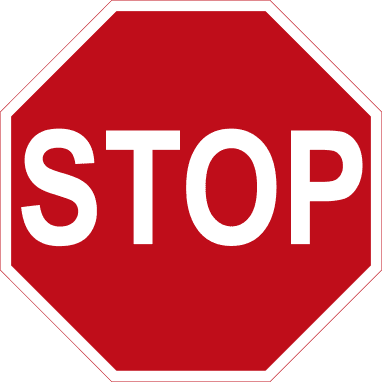
Stop
Come to a complete stop at the line and give way to all traffic. The only octagonal sign in use, so it reads even when dirty or obscured.
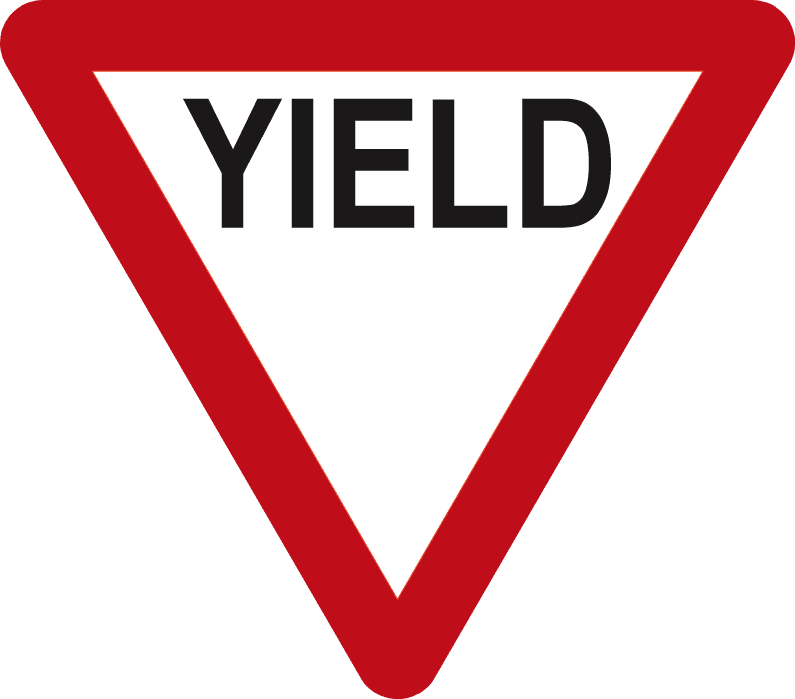
Yield
Give way to traffic on the major road, and at a roundabout to traffic coming from your right or already on it. You need not stop if the way is clear, which is what separates yield from stop.
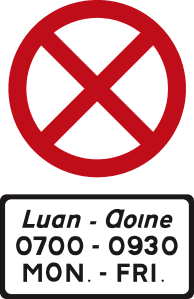
Clearway
No stopping at all during the hours shown, not even to set down a passenger. Stricter than a no-parking sign, which is the distinction the test looks for.
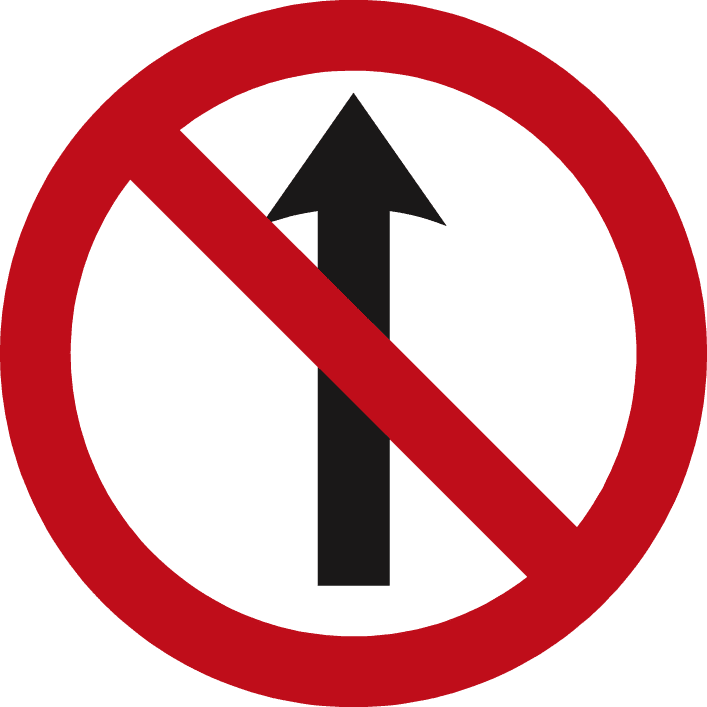
No entry ahead
The road ahead cannot be entered from this direction. Normally the far end of a one-way street.
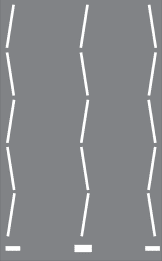
No parking road marking
Parking is not allowed in this area.
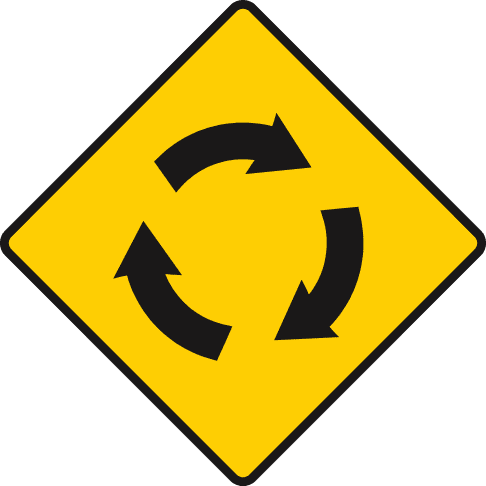
Roundabout ahead
A roundabout is coming. Give way to traffic already on it, which comes from your right.
Browse every sign by category
- Regulatory signs (29) Mostly circular. A red ring forbids, a blue disc instructs.
- Warning signs (56) Yellow diamond with a black border and a black symbol.
- Information and motorway signs (14) Rectangular. Blue for motorways, white or green elsewhere.
- Road markings (14) Painted on the surface, not on a post.
- Hand signals and traffic signals (21) Given by a Garda, a driver or a cyclist, or shown by a light.
Signs, markings and signals all carry the same weight
A continuous white line is as binding as a no-overtaking sign, and a Garda directing traffic overrides both the signs and the lights. The theory test tends to probe exactly these precedence questions rather than asking you to name a picture.
Learning them properly
Reading a list is not the same as recognising a sign at speed. Test yourself with the road signs quiz: 20 signs with pictures, each answer explained. Once you have been through the categories, run practice questions so the signs come at you the way they do in the exam, and use a mock test to check they have stuck.
Signs also come up throughout the most failed questions, and the rules they enforce are covered in speed limits and penalty points.