Warning signs tell you what is coming. Ireland uses a yellow diamond where much of Europe uses a red triangle, which is the single most useful thing to know when reading Irish signs for the first time.
All 56 warning signs
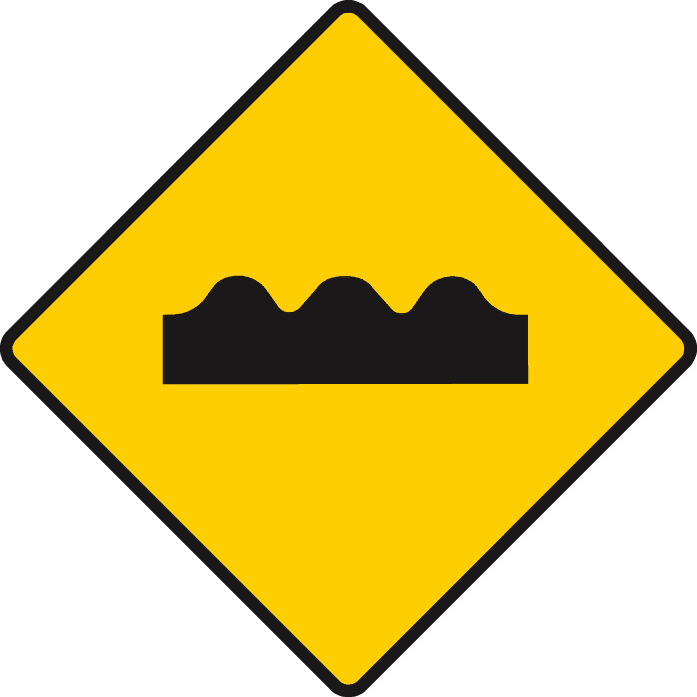
Bumps or hollows
The road surface rises and falls sharply enough to affect control.
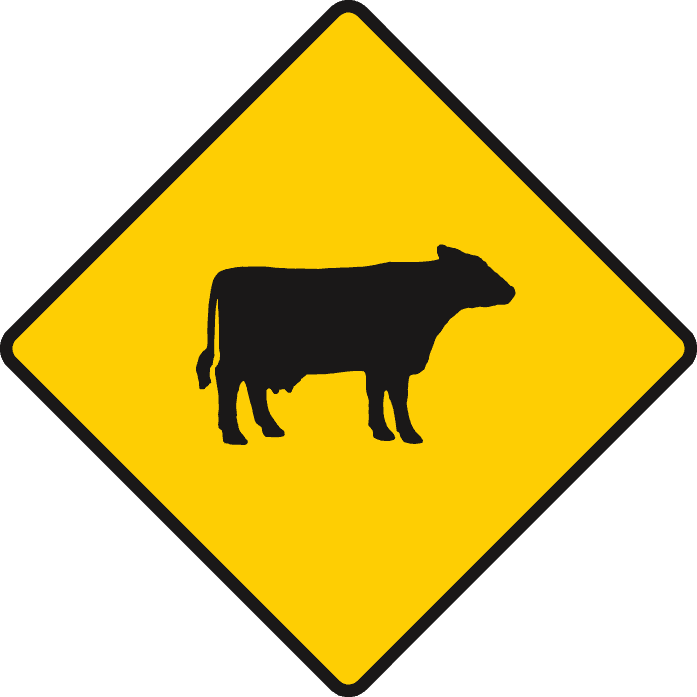
Cattle or farm animals
Livestock may be on or crossing the road, particularly near field gates and milking times.
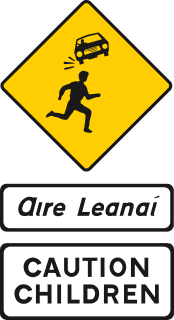
Children crossing
Children are likely to be crossing here, so expect the unpredictable.
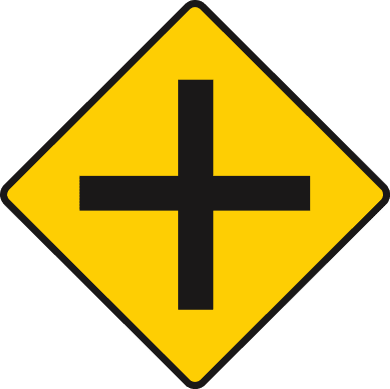
Crossroads of equal importance
Neither road has priority. Approach ready to yield, because nobody has right of way by default.
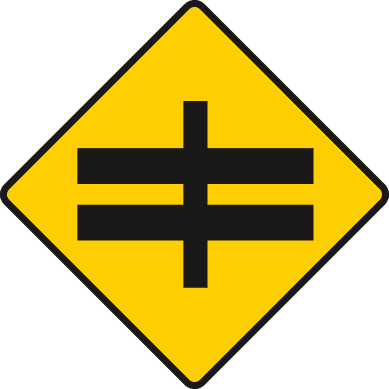
Crossroads with a dual carriageway
The road ahead crosses a dual carriageway, so you cross two separate streams of traffic.
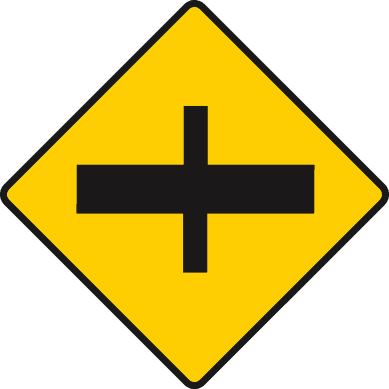
Crossroads with a major road
You are on the minor road and must yield to traffic on the major road ahead.
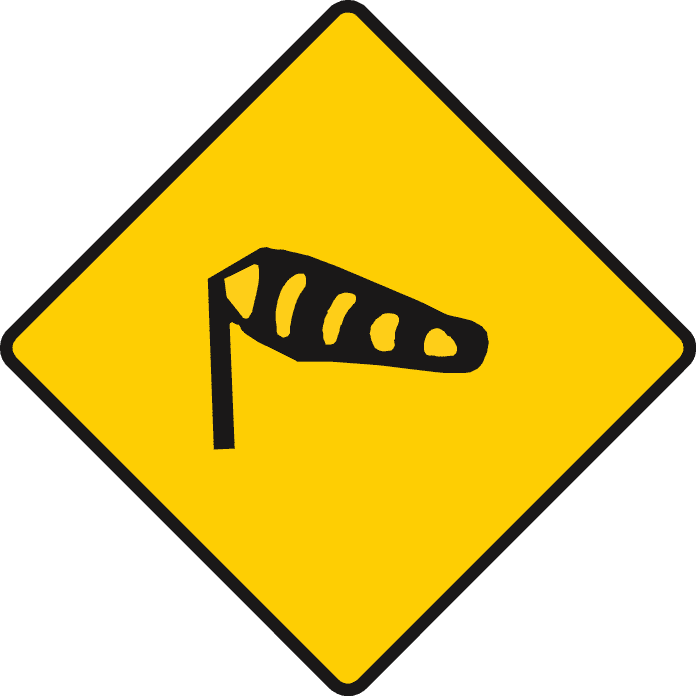
Crosswinds
Strong side winds, typically on exposed bridges and open ground. High-sided vehicles are worst affected.
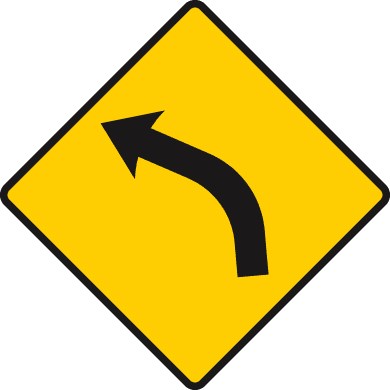
Dangerous bend ahead
A single sharp bend, in the direction the arrow curves. Slow down before it rather than in it.
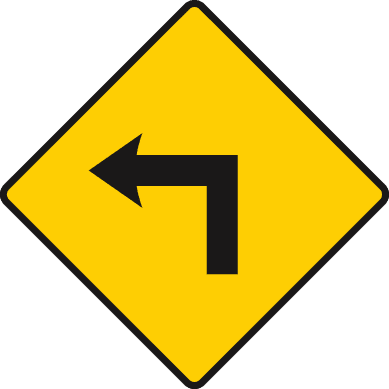
Dangerous corner ahead
A sharp corner where the road changes direction abruptly.
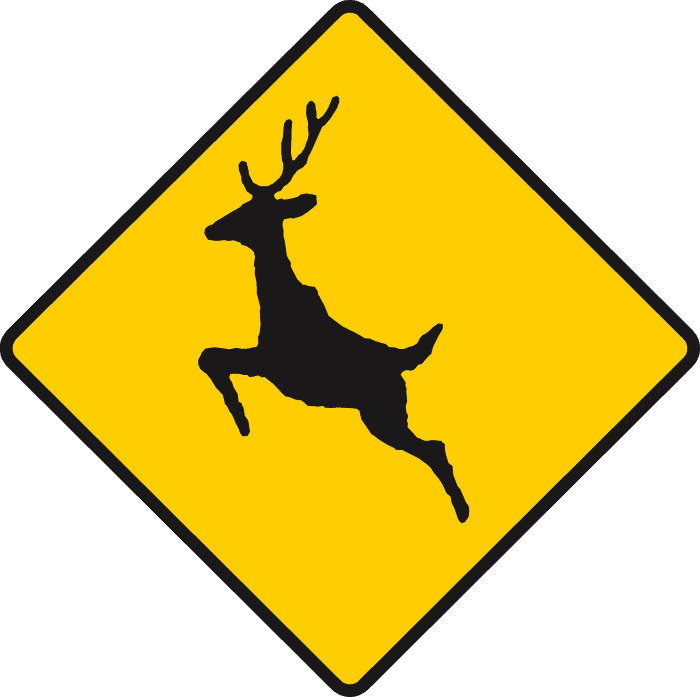
Deer or wild animals
Wild animals cross here. Deer are most active around dawn and dusk, and rarely travel alone.
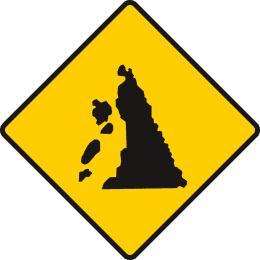
Falling rocks
Rock or debris may fall onto the road, and material may already be lying on it.
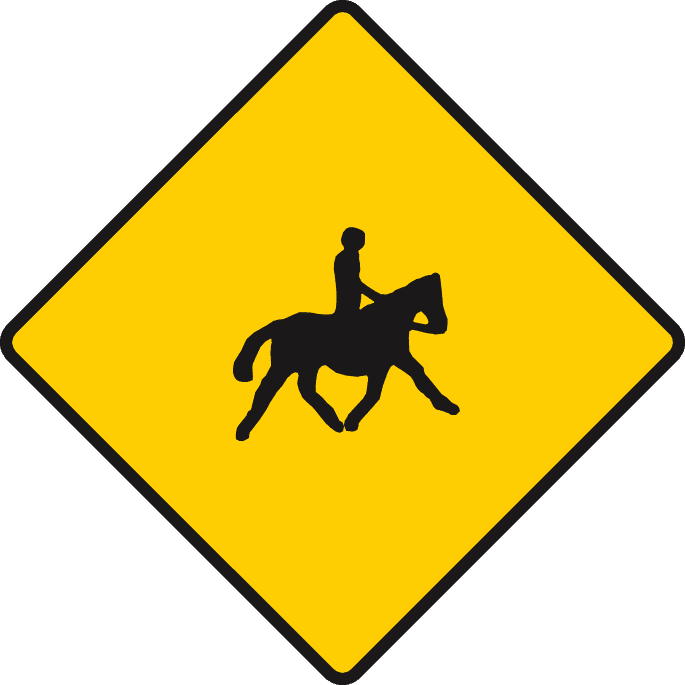
Horses or ponies
Horses may be on the road. Pass slowly and leave plenty of room.
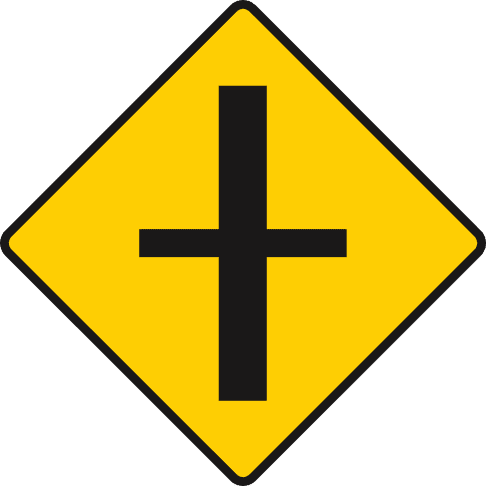
Junction with a minor road
A side road joins ahead. You have priority, but traffic may still pull out.
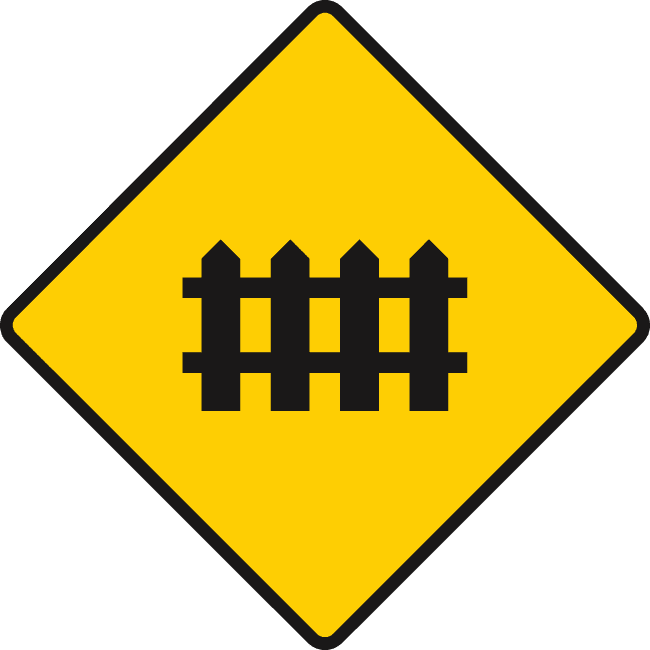
Level crossing with barriers
A railway crossing protected by gates or barriers.
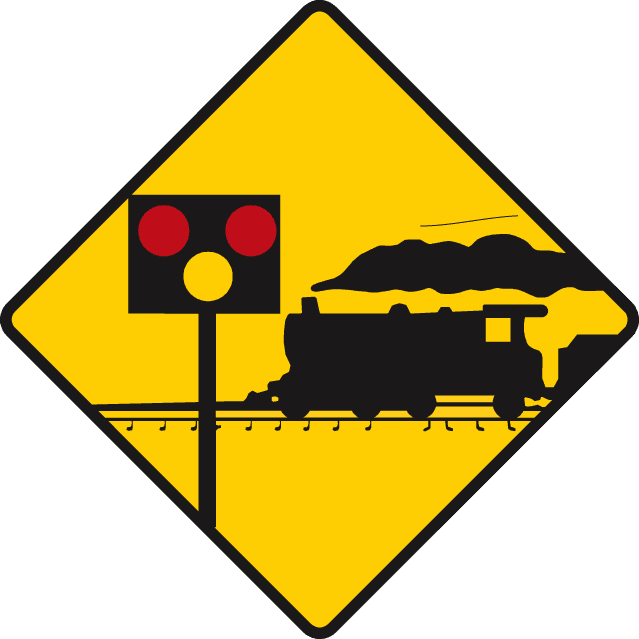
Level crossing with lights and barriers
A railway crossing controlled by flashing lights and barriers.
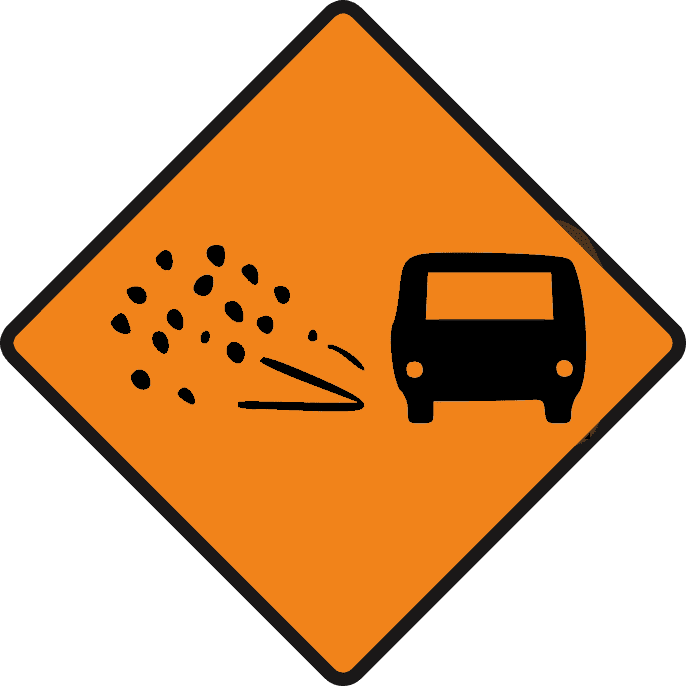
Loose chippings
Loose stone on the surface. Slow down to protect your own windscreen and everyone else's.
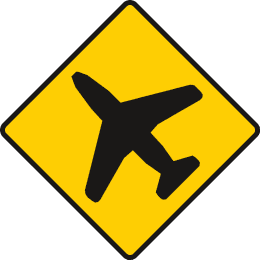
Low flying aircraft
Aircraft pass low over the road, usually near an aerodrome. The noise can be startling.
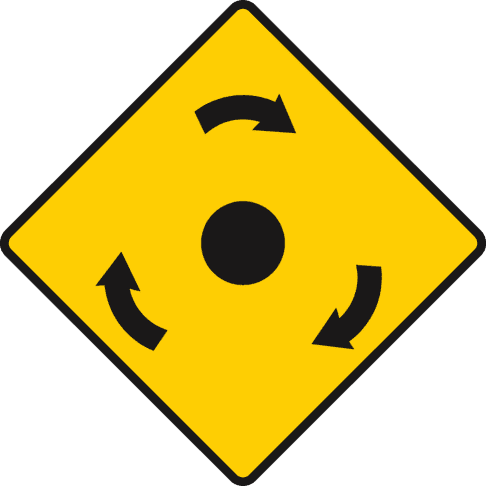
Mini roundabout ahead
A small roundabout with a painted or low central island. The same give-way rule applies.
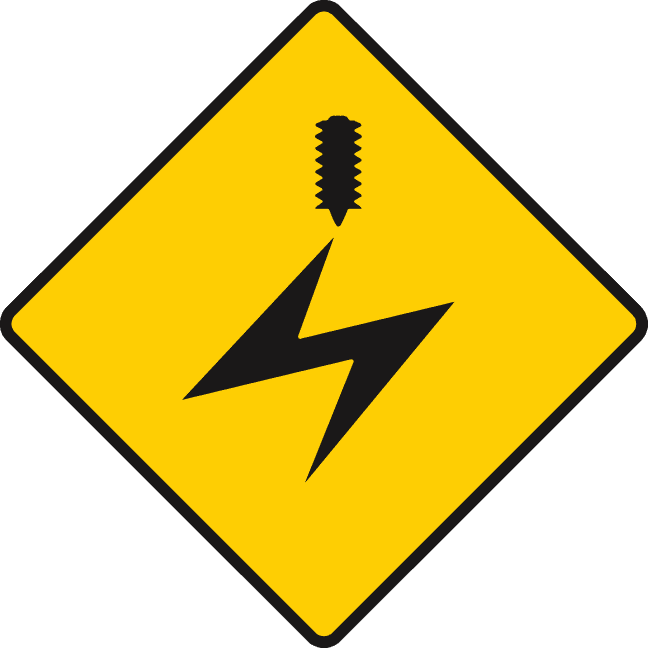
Overhead electric cables
Live cables cross above the road, with a height limit that matters for high vehicles.
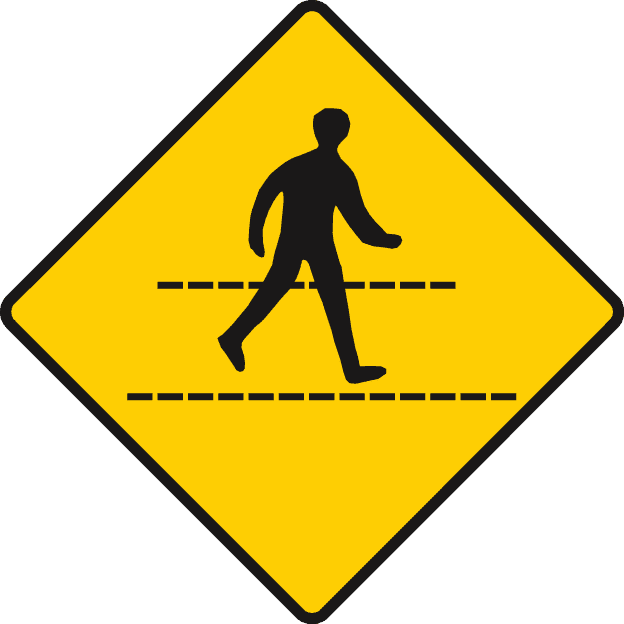
Pedestrian crossing ahead
A marked crossing point is coming up. Be ready to stop for anyone waiting.
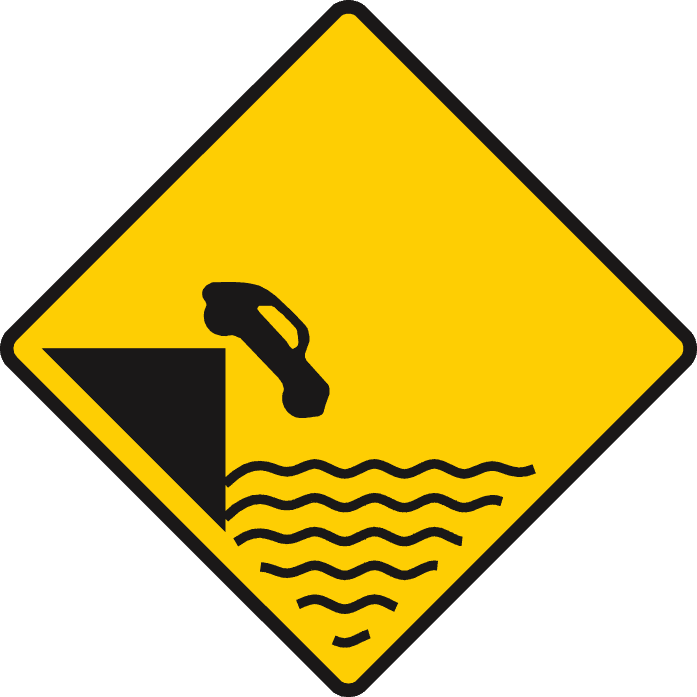
Quay, canal or river ahead
The road runs alongside or ends at deep water, often with no barrier.
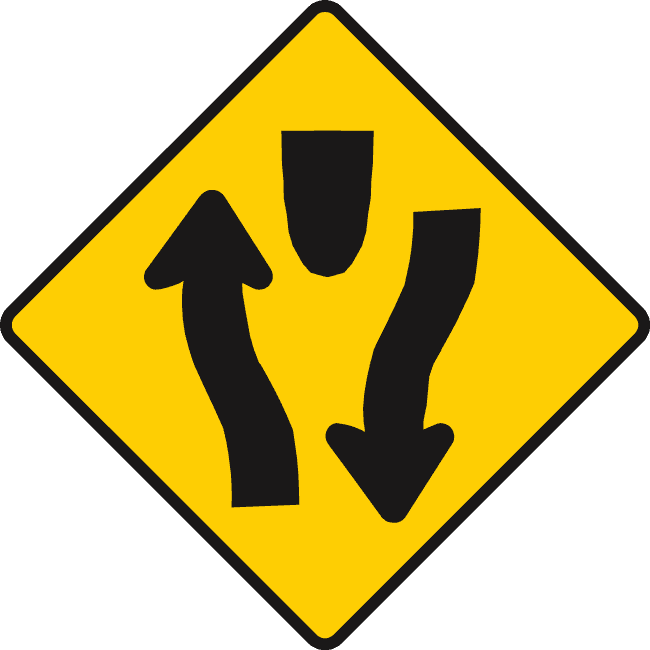
Road divides ahead
The carriageway splits around an island or into separate routes.
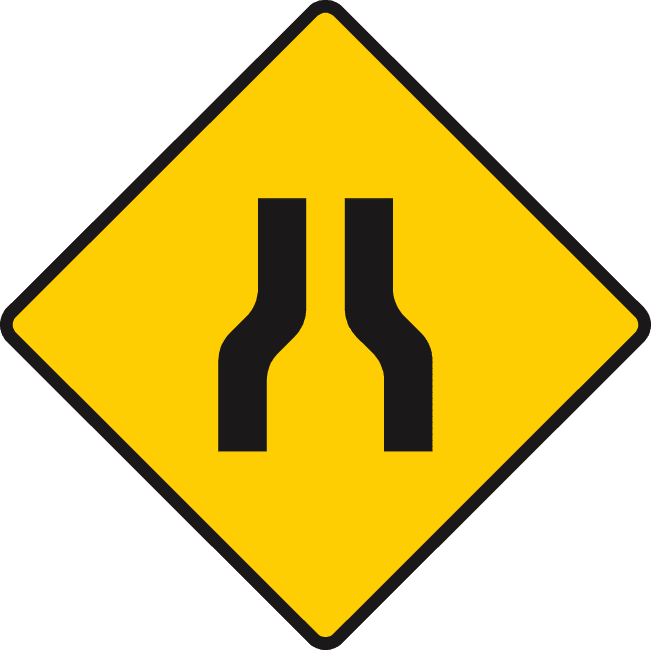
Road narrows from both sides
The carriageway gets tighter on both sides.
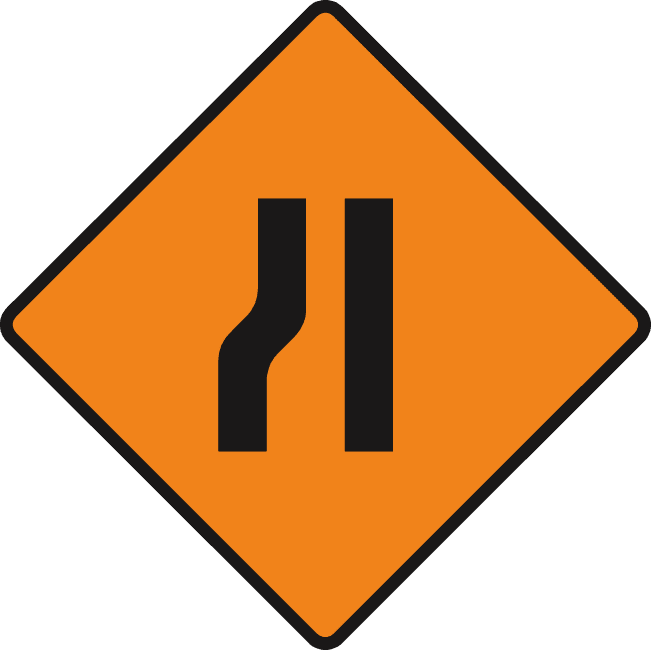
Road narrows from the left
The carriageway narrows from the left-hand side ahead.
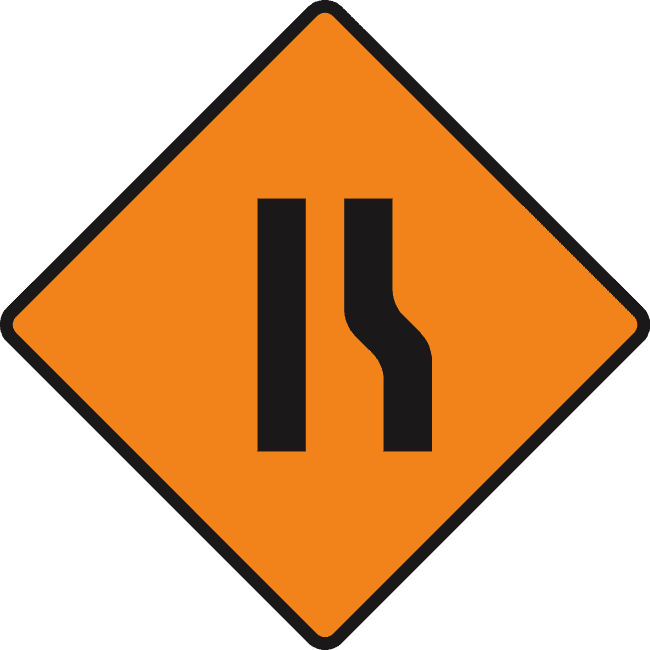
Road narrows from the right
The right-hand edge closes in ahead.
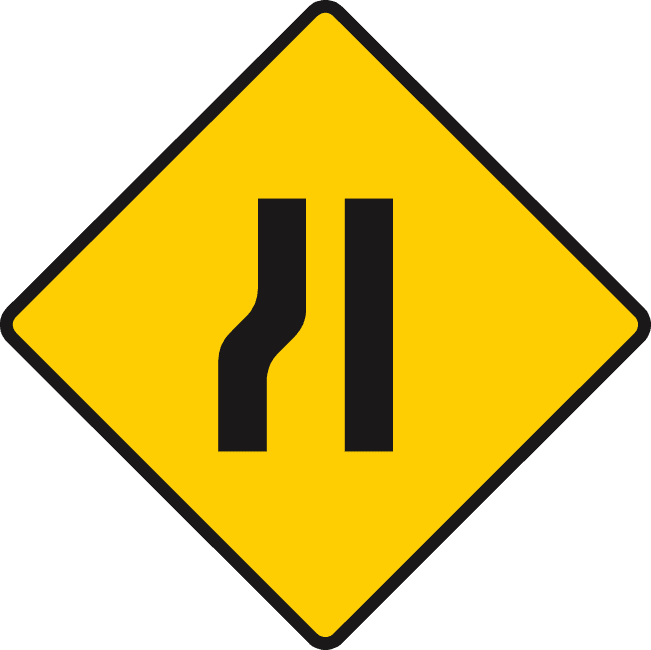
Road narrows on the left
The left-hand edge of the road closes in ahead.

Roadworks: proceed with caution
At roadworks, this tells you to continue at a speed that lets you stop for whatever you find.

Roadworks: stop
At roadworks, stop before or at the sign and wait to be directed on.
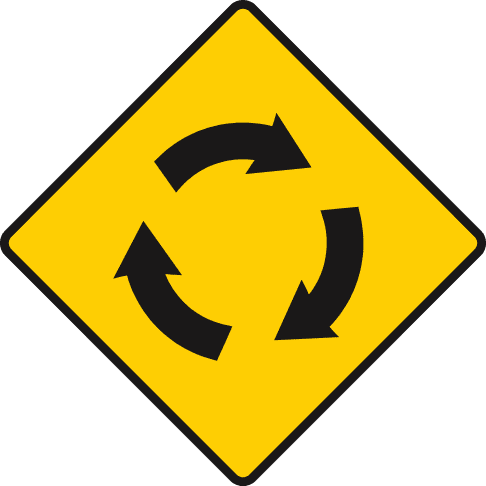
Roundabout ahead
A roundabout is coming. Give way to traffic already on it, which comes from your right.
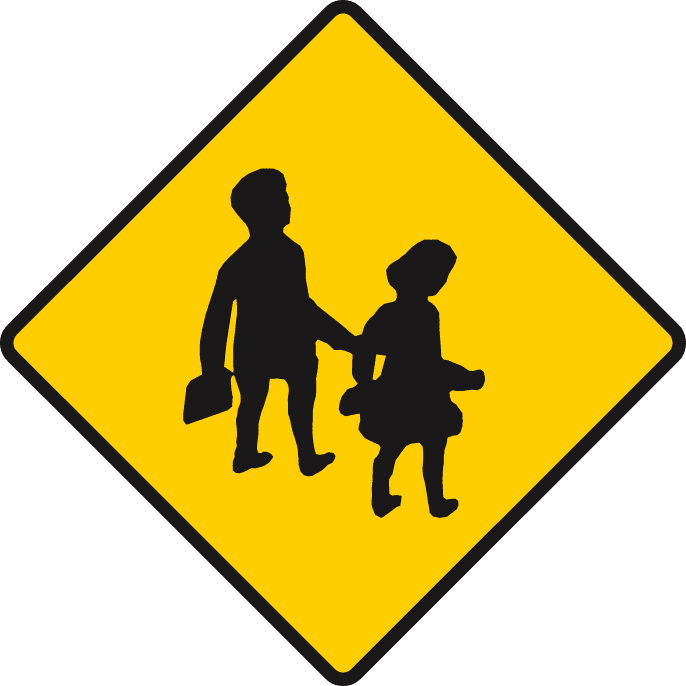
School ahead
A school beside the road. Expect children, parked cars and sudden stops at certain hours.
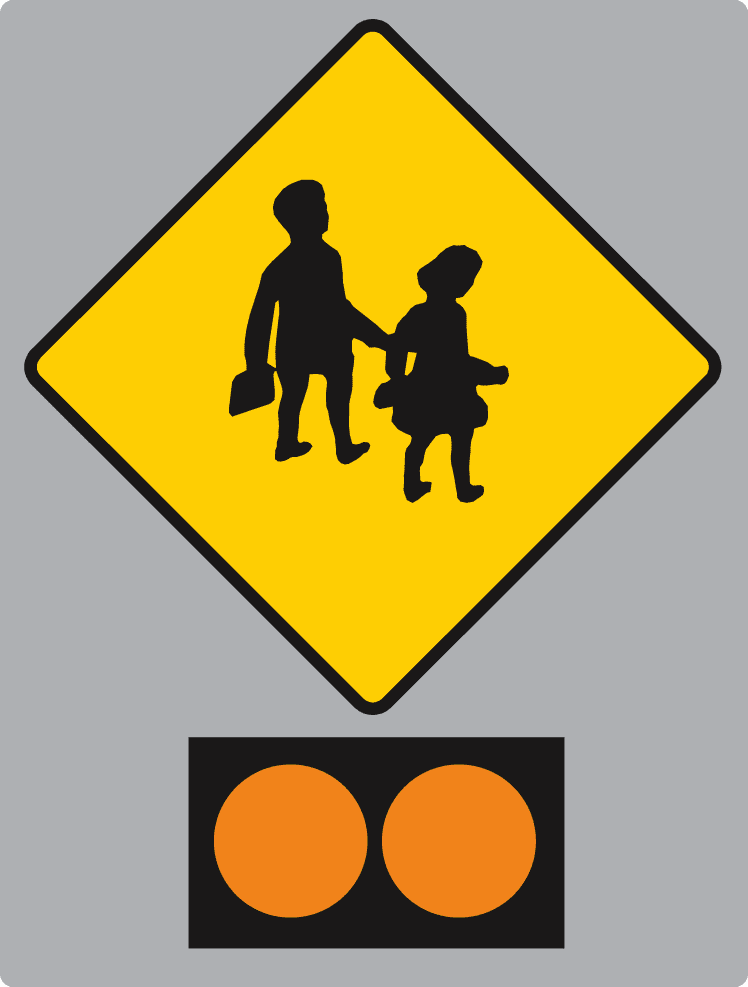
School children crossing
A school crossing point, often with a warden on duty at the start and end of the day.
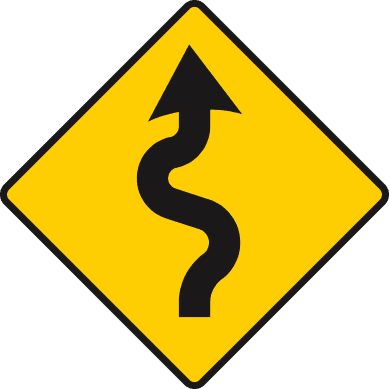
Series of dangerous bends
More than one bend in quick succession, starting in the direction shown.
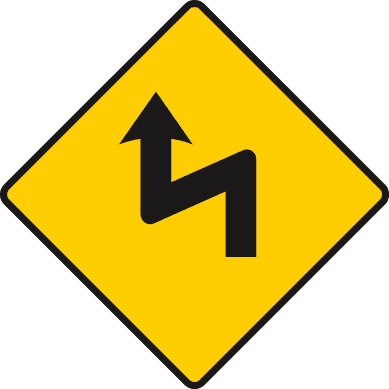
Series of dangerous corners
Several sharp corners follow one another.

Sharp change of direction to the right
The road turns sharply right. Chevrons on the bend itself repeat the message.
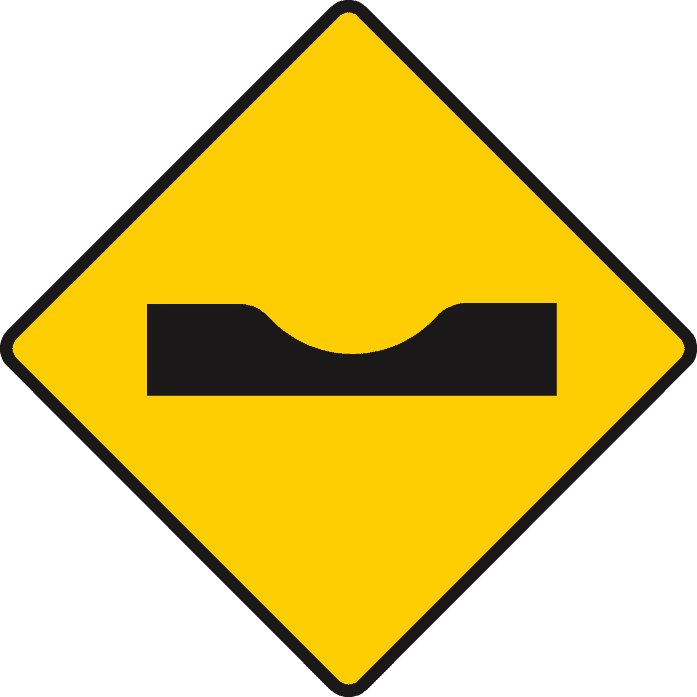
Sharp dip
A sudden depression in the road, which can hide an oncoming vehicle.
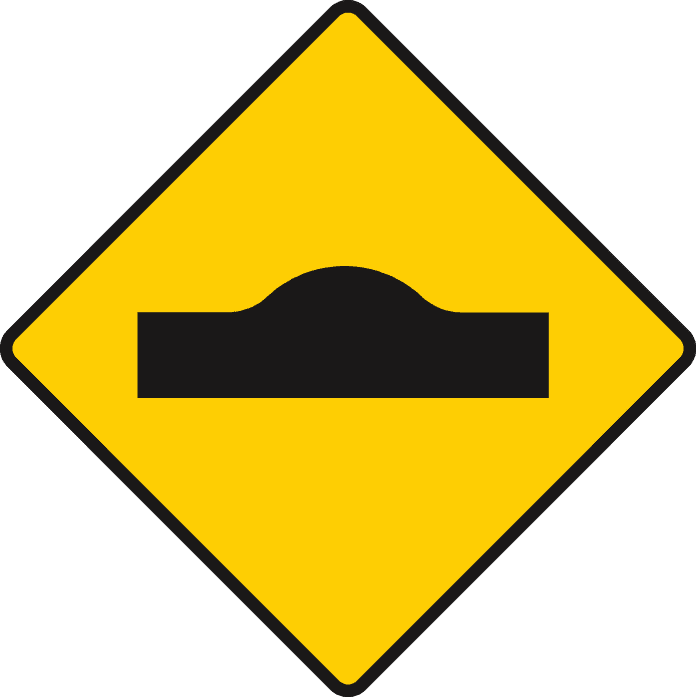
Sharp rise
A hump or abrupt rise. Long or low vehicles risk grounding.
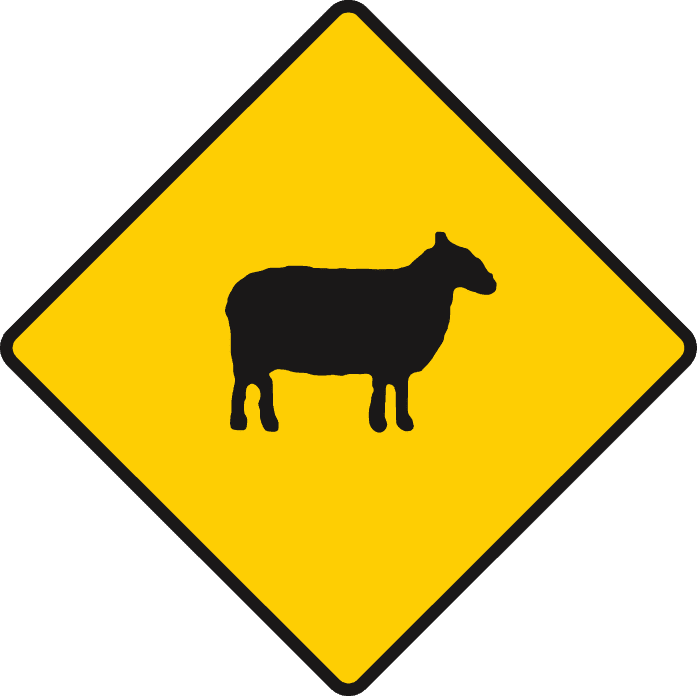
Sheep
Sheep may be on the road. On open mountain roads they are often unfenced.
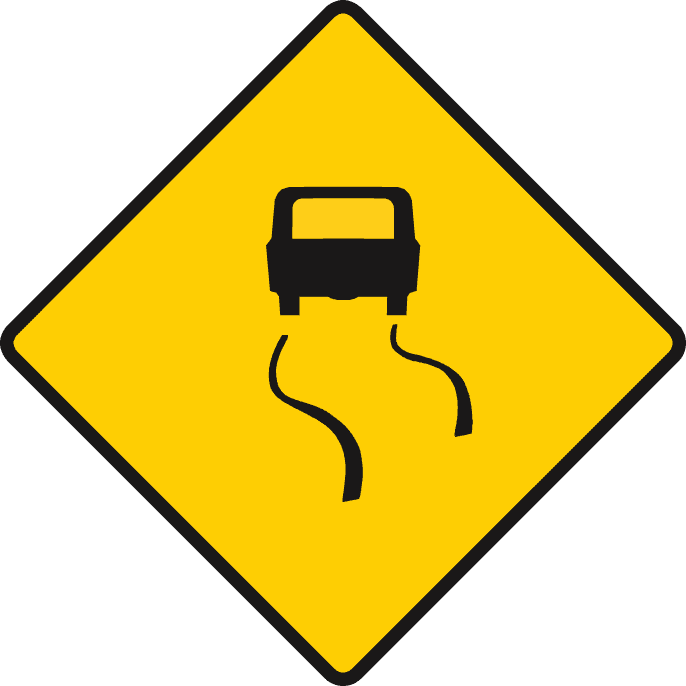
Slippery road
The surface loses grip more easily than normal, especially when wet.
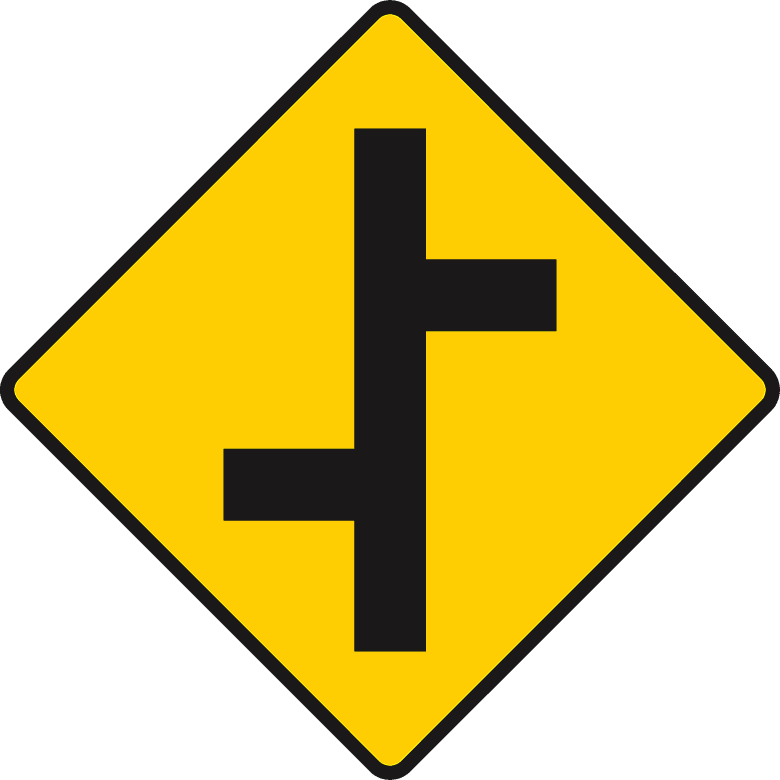
Staggered crossroads
The side roads do not line up. Traffic emerges from both sides at slightly different points.
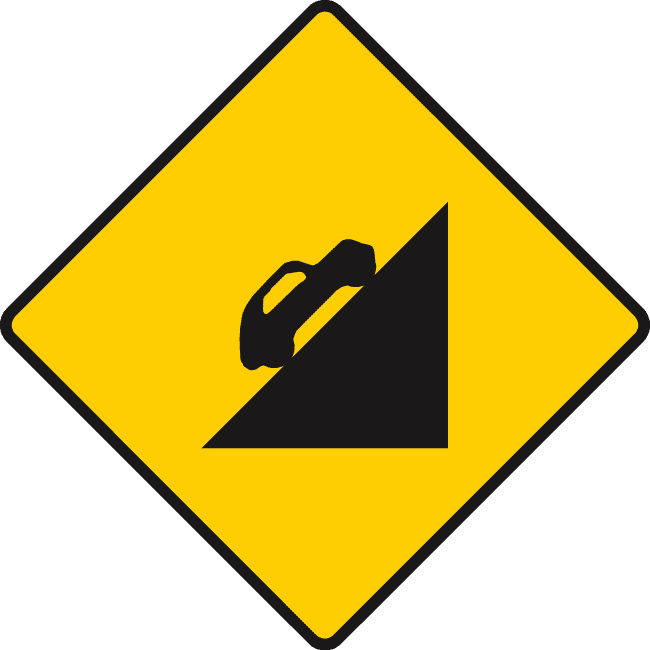
Steep ascent
A steep uphill gradient. Slower vehicles may be labouring ahead of you.
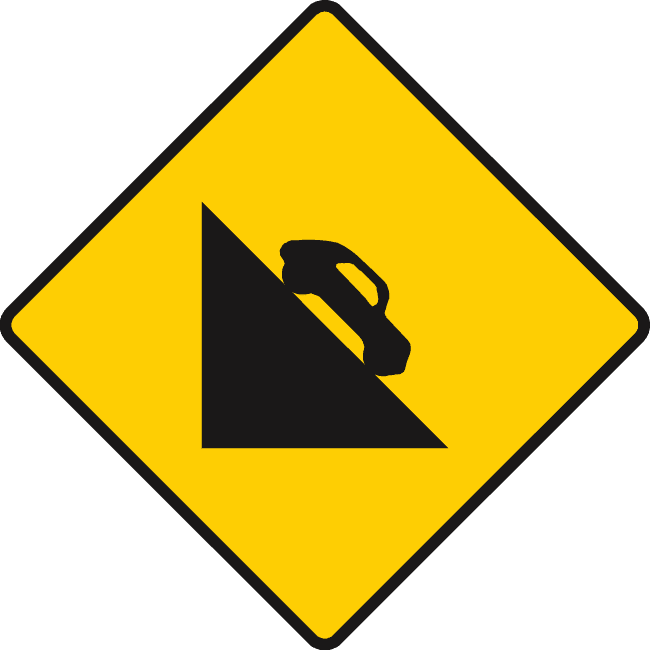
Steep descent
A steep downhill gradient. Select a lower gear rather than riding the brakes.
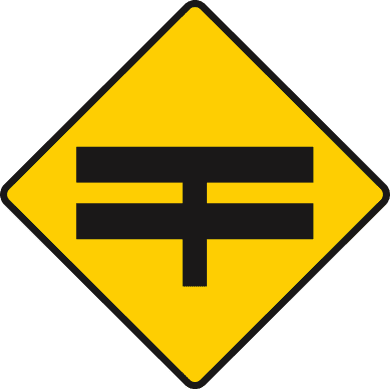
T-junction ahead
The road ends ahead and you must turn left or right.
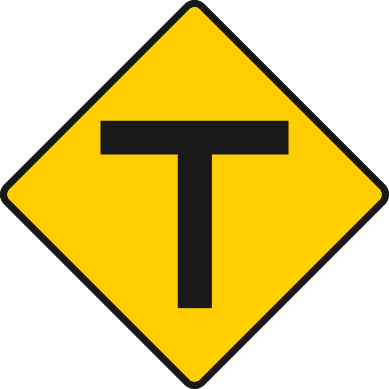
T-junction of equal importance
A T-junction where neither road has priority.
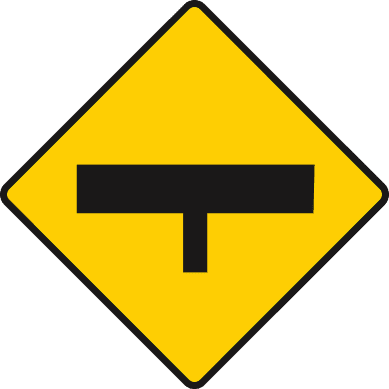
T-junction with a major road
You must yield to the traffic on the road you are joining.
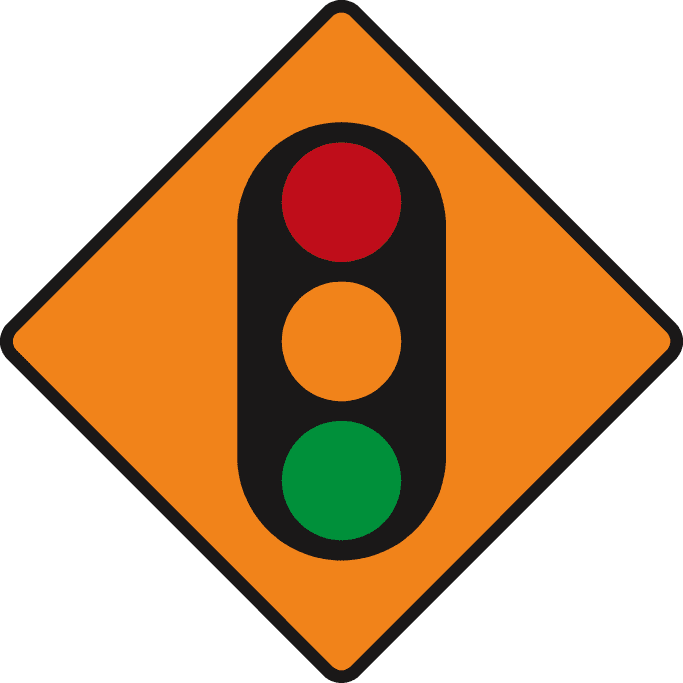
Temporary traffic signals
Portable lights, normally controlling a single lane past roadworks.
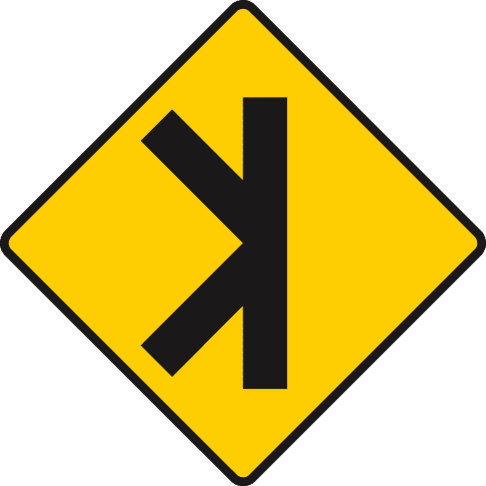
Traffic merging and diverging
Vehicles both join and leave along this stretch, so expect lane changes on either side.
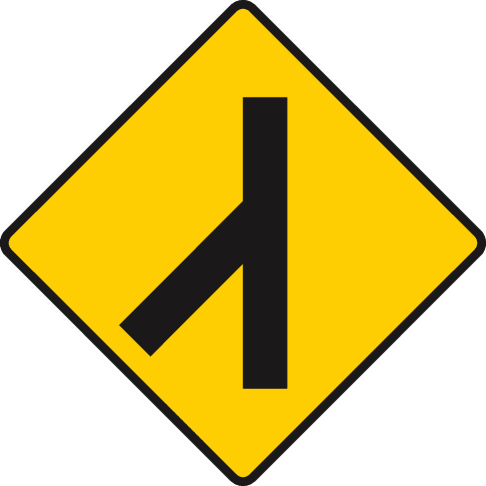
Traffic merging from the left
Another stream joins yours from the left. Neither has automatic priority, so adjust your speed.
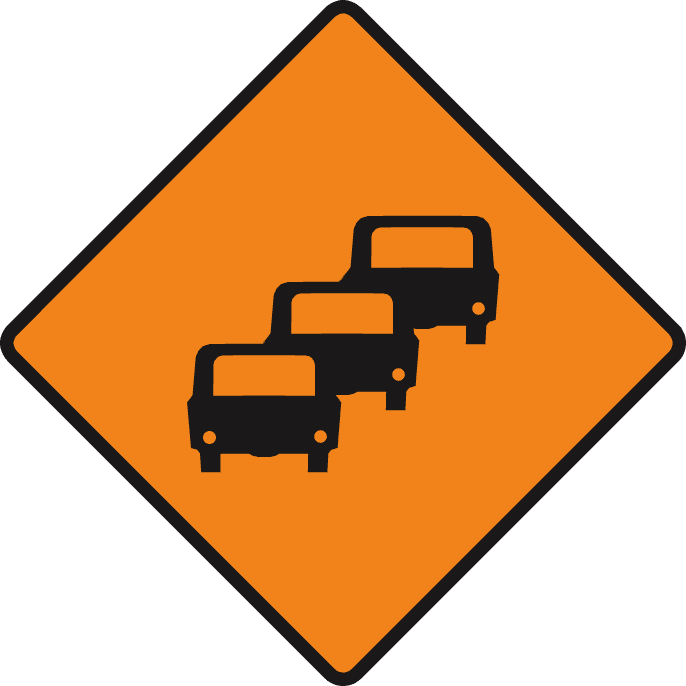
Traffic queues likely
Stationary or slow traffic is common here, often before a junction or roadworks.
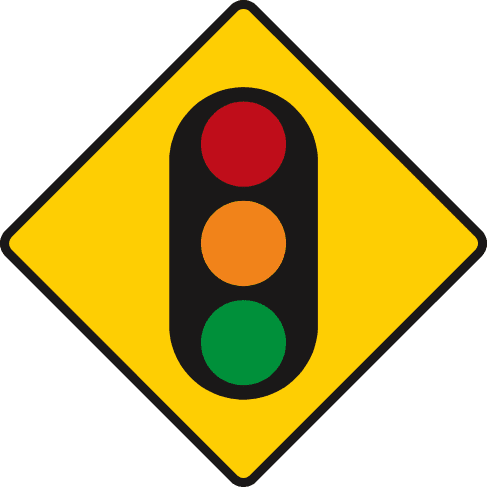
Traffic signals ahead
Traffic lights are coming up, usually where they would otherwise be hidden.
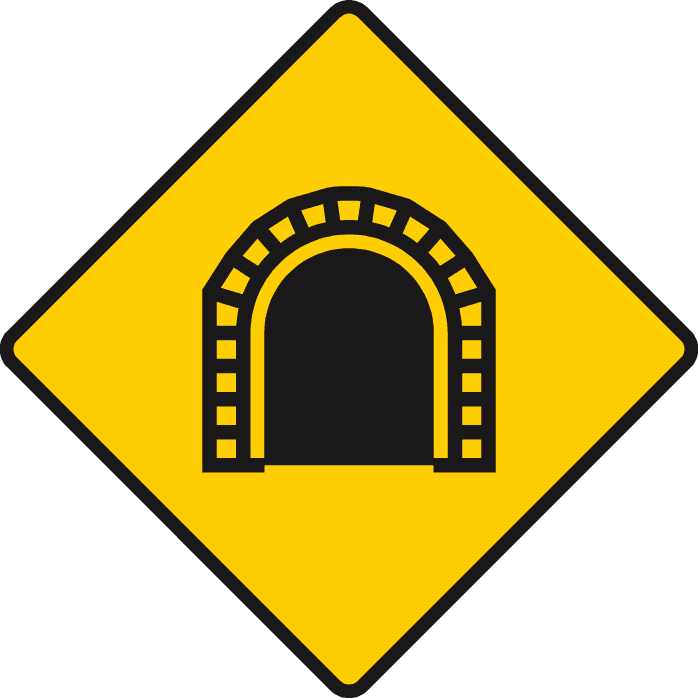
Tunnel ahead
A tunnel is coming up. Remove sunglasses, turn on dipped headlights and keep your distance.
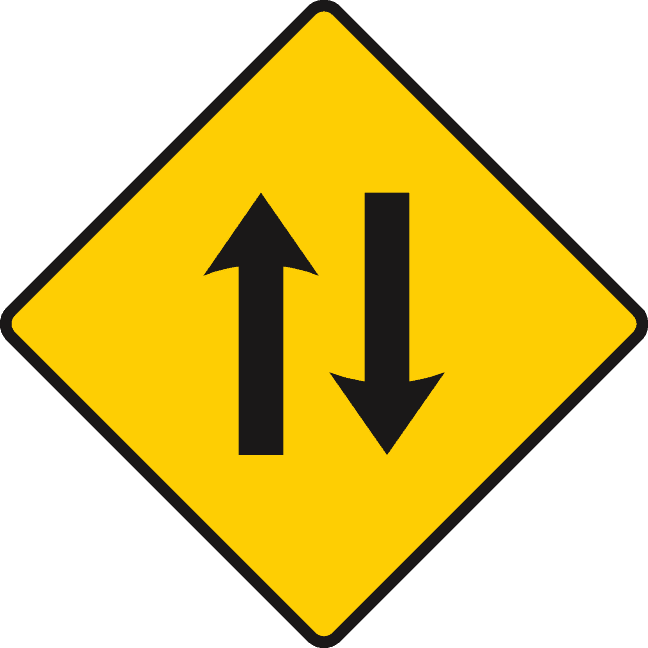
Two-way traffic ahead
Traffic now comes towards you, often at the end of a one-way section or a dual carriageway.
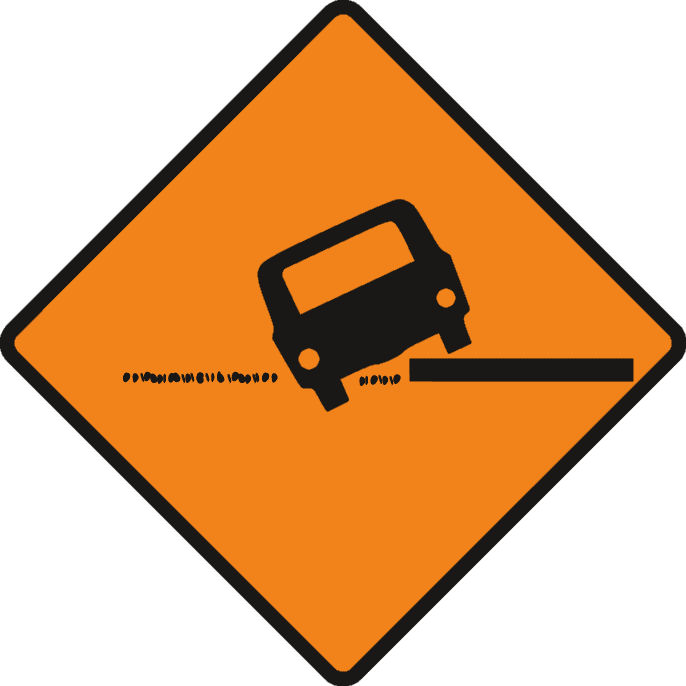
Uneven surface
The road surface is rough or broken.
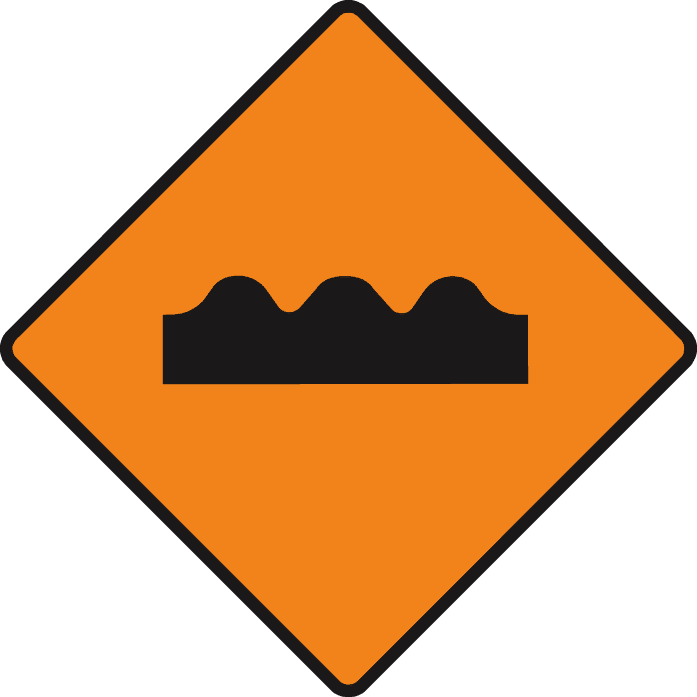
Uneven surface ahead
Advance warning of a rough or broken stretch of road.
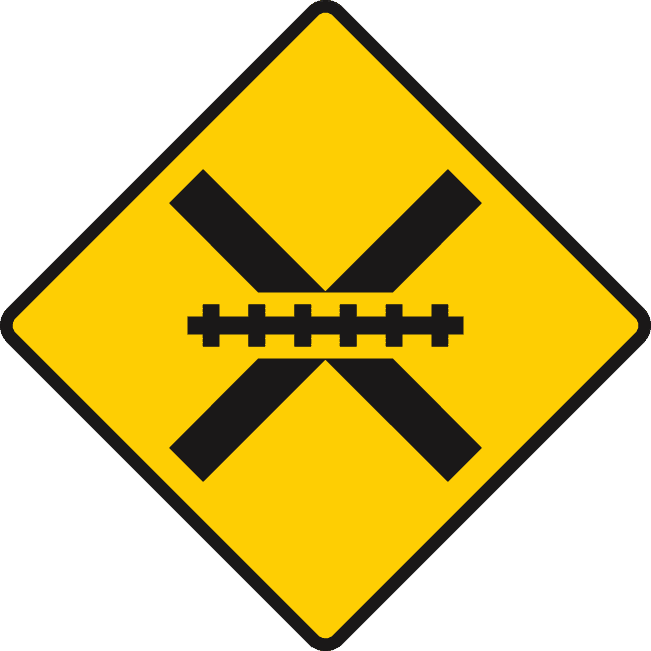
Unguarded level crossing
A railway crossing with no gates or barriers. You are responsible for checking the line is clear.
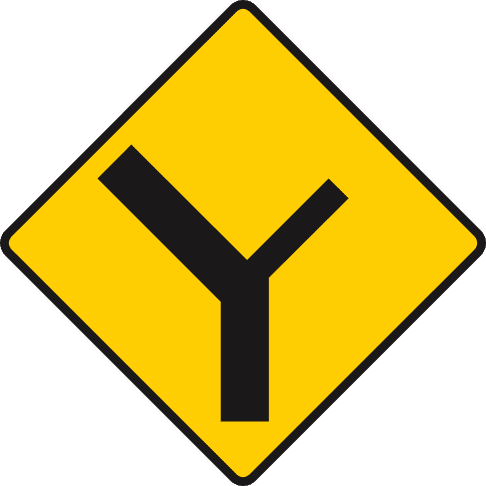
Y-junction bearing left
The road forks and the main route bears left.
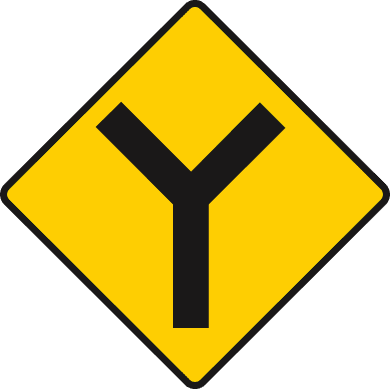
Y-junction of equal importance
The road forks into two branches with neither taking priority.
Other categories
- Regulatory signs (29)
- Information and motorway signs (14)
- Road markings (14)
- Hand signals and traffic signals (21)
- Back to all road signs
Test yourself on these
Recognising a sign in a list is easier than recognising it at a junction. The quiz opens on warning signs, shows you each sign, and explains every one you miss.
Then run practice questions to see them in context, or sit a mock test under exam conditions.